21st Century Music, Art and Design

Conscious Music, Progressive Politics, Inspiring Art

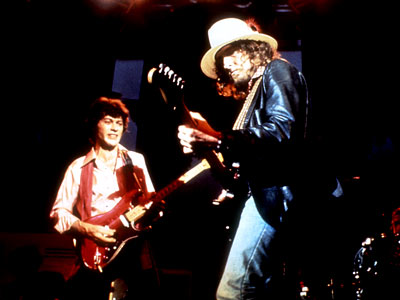
Robbie Robertson and Bob Dylan

Robbie Robertson and Bob Dylan

Yuya Joe College's Facebook Wall

Flag of Earth

Flag of Earth
by James Cadle, modified by inclusion of NASA image of our planet

Occupy Toronto Market Exchange

mediaINDIGENA

Monday, August 29, 2011

Being a parent to grown-up kids

Be there for emergencies, share leisure time together


There are two different things I'd like to convey with this blog post:

Staying together for the kids

A) If you have young children, and your marriage isn't great and you feel that the only reason you are staying together is "for the kids" then stick with that idea for now. As your kids get older, especially after they reach their 20s, you'll find that you and your spouse have more time for each other again and the closeness you originally had can re-emerge. Also, if a lot of your kids move out within a short period of time, consider getting a dog, as it will keep the activity level up in the house, and make you less lonely.


Benefits of grown-up offspring

B) If you think that you'll be done raising your kids once they reach 18 or 20 years old, think again. We have 2 boys and 2 girls all in their early twenties. Both of the girls have called us screaming and crying in the middle of the night within the past year, one that ran into an abusive taxi driver who abandoned her on the side of Highway 404, and the other was physically assaulted by her now ex-boyfriend. Each of these instances meant running out the door and driving at high speed in the middle of the night to the location where the daughter was ... very scary both times.

With our sons, there was a moment when one of them was 15 or so and he really really needed my encouraging words and hug, and it frightens me to think of how he would have felt had I not been there to show him the love and support he deserved (he is a fantastic young man).

Regarding our other son, I can't think of any instance where I have had to come to his rescue, emotionally or otherwise, however with him that is not the story. This son and I go to concerts together and play guitar / jam quite frequently, so even though he may not have needed me around as much as the others, the key is we enjoy spending time together and my quality of life is so much higher because of the activities we share an interest in.


In summary, if you feel you are staying together "for the kids," that may be a better idea than you can understand at this stage in your marriage, so don't be ashamed of that, just be loving to your children and kind and respectful to your spouse.

Your kids will soon be grown-ups, and if you show them the love and respect they all deserve, then you will have raised your future best friends, and there's no greater reward or feeling in life.

Except maybe Grandchildren, though we're not there yet...

Monday, August 22, 2011

Mary Spencer fights the good fight, mentors Cape Croker kids


If there's anything I admire in this world, it's a gal who knows her roots and honours her father by continuing his mission, and if she can throw a mean right hook, well, that's pretty cool too!

Here is a story about Canadian Olympic gold medal hopeful Mary Spencer who regularly takes time out from her busy life to travel many hours to Cape Croker reserve near Wiarton, Ontario, where she hangs with the kids, brings boxing equipment and generally continues the benign tradition of her dad, who was Ojibway and was the United Church minister on the reserve.


By Randy Starkman
TheStar.com Olympic Sports Reporter


Mary Spencer is a true freedom fighter

WIARTON, ONT.—For Canadian gold medal hopeful Mary Spencer, the road to the 2012 London Olympics runs right through the Cape Croker Indian Reserve.

The three-time world champion, in heavy training for the Olympic debut of women’s boxing next summer, somehow finds the time to drive 10 hours here and back from Windsor — at least once a month — to hang out with “her kids” on the reserve.

On a recent visit, one perfect summer’s day, Spencer and the native children she mentors go out for a run, paddle canoes, play volleyball and tuck into a barbecue together. It’s as though Christmas has come early to Cape Croker, and not just because the champ has brought four cartons of new boxing gear.

From the moment she arrives, Spencer draws the kids like a magnet. They crowd around, vying for attention, peals of laughter echoing along the shores of Georgian Bay. The youngest literally hang off her as they splash in the water.

“I’m a leech!” cries Breanna Watkinson, who attaches herself to Spencer during a swim. But they all seem to get some quiet time with her, too, teens and younger ones alike, including 8-year-old Halle Johnston, who skips rocks with Spencer as they wait for the canoeing to commence.

Spencer asks Johnston about school: “I like it, but there’s bad kids there. They call me names.”

“But you don’t listen to them, do you?”

The visits have an extra meaning for Spencer because her father, Cliff, who is Ojibway, was a United Church minister at Cape Croker when Mary was younger.

“I feel like this is my own version of it, that I can come out and hang out with the kids and be there for them if they need advice or show them stuff, teach them stuff,” she says. “It’s almost the same thing. That’s the way I kind of see it, a ministry of sorts.”

A ministry it may be, but there is no preaching. Mary has an easy rapport with the children, many of whom she’s known for years.

“Do you ever swear?” Daisy Jones asks as they come out of the water.

“No,” says Spencer

“I don’t believe you,” says Jones. “You said the word sh-ts.”

“That’s because you guys were trying to drown me,” laughs Spencer.

While the visits are exhausting — for all involved — Spencer says she easily gets back just as much as she gives. Spending time at the reserve replenishes her spirit in a way little else can.

“I think about when I was a kid . . . little things that somebody probably didn’t think would make a big impression on me, but it did,” she said. “So, I’m hoping these are the kinds of days that these kids are going to remember. . . . They’re having a lot of fun while doing things that are good for them.”

Spencer says her obvious bond with the young ones here comes naturally.

“Coming back to Cape Croker is special for me just because some of these kids are my cousins, their parents knew my parents or know me. I feel like I’m at home when I’m here.”

It’s all a far cry from Spencer in the ring, a fearsome opponent who has been known to send a message with more than her fists. She won her third world title by dismantling reigning world champion Jinzi Li of China last fall in the Barbados 14-2 in the final — a feat made more impressive by the fact she moved up in weight class from 66 to 75 kilos, because there are only three women’s Olympic divisions.

Rather than go out and celebrate, Spencer had a plan. She made sure she woke up first thing the next morning to go for a run around the hotel complex where the athletes were staying, hoping opponents would see her.

“My whole reasoning for that is, I want them when they get in the ring with me to be okay with losing to me, to be okay with giving up when they should be pushing harder,” she told the Star at the time. “I want them to think I’m supposed to win.”

To the other boxers, Spencer is simply the reigning world champ and the one to beat. But there is another part of her identity she would like the world to know about.

“I remember every time I used to represent a native team, whether it was a basketball team or a volleyball team, there was just that sense of pride,” she says. “I think other native athletes need to feel that sense of pride when they see me competing, the same way other Canadians do. There should be something special for aboriginal Canadians.”


That something special is evident to 8-year-old Halle, who was on the receiving end of the pep talk about bullies at school. What’s so special about the boxer’s visits to Cape Croker?

“She’s fun, she’s cool and she’s awesome,” says Halle.

Jennifer Johnston, Halle’s mom, says what Spencer provides, apart from the laughs and chats, is inspiration.

“The kids really love her. I see a huge difference in the kids that do go. She’s a good inspiration to the children here. They look forward to having her,” she says. “Every month, they make sure they ask when she’s coming and they’re waiting for her, they’re waiting at the door with open arms and great big ‘I love you’s.’ ”

The boxer is slowly drawing more kids out to the group. On this day, 5-year-old Madeline Linklater turns up because she wants to meet Spencer after seeing her featured on TSN. She shyly hands Spencer a note and picture she has made in a handmade envelope. It wishes her good luck at the Olympics and shows a podium with a medal and boxing gloves.

Spencer keeps it real with the kids with an easy laugh and a self-deprecating sense of humour. They talk about anything and everything.

Some of the kids struggle with motivation and get into trouble, something that Spencer can definitely relate to having grown up in a housing project in Windsor. She’s reluctant to delve into her misspent youth too deeply, but admits she skipped more classes than she ever attended and even failed gym.

Her transformation happened the moment she stepped into a boxing ring.

“Boxing for me was almost supernatural,” she said. “I started boxing and it was like ‘Okay, this is what you’re going to do and you’re going to make sure you become a champion.’ Day one, I wanted to be a champion. I was serious about being a champion.

“Some things took time to change, like my group of friends. That took a bit of time. . . . If you’re doing something right, other things just won’t mix with it. Eventually things just turned around.”

It’s a powerful story, one that takes on more resonance for the kids here as they realize she is just like them. They are following her every step of the way, and recently went to watch her fight in Wasaga Beach. The community has started talking about trying to raise money to send some of the children to the London Olympics, although they say it’s unlikely to happen.

But the kids will be in London, anyway, just as they were in Barbados when Spencer went up against the reigning world champion from China.

“As I was walking up to the ring, I was imagining that these kids were in the stands, that they were watching this fight and I needed to win because they needed to see me win, they needed to know that I was going to win,” Spencer says.

“It just carries that extra weight when you’re trying to reach out to someone or trying to do something. . . . I remember thinking about them going into that final, so of course it fuels the fire.”

As this day draws to a close, Spencer reluctantly pulls herself away from “her kids.” After they’ve all jumped off a concrete pier into the cool waters of Georgian Bay, the fighter prepares for the five-hour-plus drive back home to Windsor.

The young ones and teens, exhausted after being put through their paces, are loathe to see her go.

But they know she’ll be back.


Help Mary Spencer represent Canada in London's 2012 Olympics - Donate Today!

Sunday, August 21, 2011

Brantford and the Yuya Joe blog


Those of you who know me and my music may wonder where the fascination with Brantford and Six Nations comes from. It is a deeply-rooted sentiment, only coming to fruition in recent months.

My dad is from Charlottetown, PEI, and my mom grew up in Grand Falls, New Brunswick. Each of those towns is a magical memory and a living part of me, as my summers were spent in and around them. I used to spend time at the Tomlinson dairy farm in Arthurette, not far from Grand Falls, and in Prince Edward island my personal Echo Beach, my own Some Beach Somewhere is Brackley Beach, just north of the capital. Cavendish Beach and the Anne of Green Gables area are more well known, but Brackley offers miles of unspoiled ocean shoreline, completely open to the public and left with natural dunes.

I grew up in Hamilton, Stoney Creek, Kitchener and Burlington, Ontario, where my family moved when I was 8 and the town I spent my formative teen years in. We lived at 455 Maple Avenue, just around the corner from Joseph Brant Museum, which I visited many times, studying and memorizing all the exhibits, buying soapstone and postcards to carry the vibes home with me.


Six Nations Chiefs meeting in Brantford


The main thoroughfare in downtown Burlington is Brant Street, which was once the brightest street in North America at night, the primary hospital is Joseph Brant, so I grew up with his iconic legacy in my mind and soul and all around me.


Tom Longboat is a local legend in the Hamilton and Brantford areas, and people who know about his exploits still believe that Tom was one of the greatest athletes humanity has ever produced.


Then of course there is Robbie Robertson of The Band, whose Mom was from Six Nations. Robbie grew up in Toronto but he spent his childhood summers on the Six Nations Reserve near Brantford with his mom's family, and the deep resonance of his music emanates from a cross pollination between the Toronto and USA sounds, and the soulful music of North America's Native Peoples.


Bob Dylan and Robbie Robertson at The Band's Last Waltz concert


In the Spring of 2011 I helped my dad and stepmom move from Burlington to Brantford, and as I already had several cousins living there, it has now joined Burlington, Grand Falls, Charlottetown and Orillia (where my mom has lived for the past 25 years) as my family "hometowns."

If you know of any Brantford-area or Six Nations blogs I can add here, please make suggestions in the comments section below.

Peace 2 All.

Yuya Joe


Tuesday, August 16, 2011

Buddhism and Ecology; WHY Buddha touched our Earth


Engaged Buddhism means the activities of daily life combined with the practice of mindfulness - Thich Nhat Hanh

by John Slaney and David Loy, HuffPost Green

In one of Buddhism's iconic images, Gautama Buddha sits in meditation with his left palm upright on his lap, while his right hand touches the earth. Demonic forces have tried to unseat him, because their king, Mara, claims that place under the bodhi tree. As they proclaim their leader's powers, Mara demands that Gautama produce a witness to confirm his spiritual awakening. The Buddha simply touches the earth with his right hand, and the Earth itself immediately responds: "I am your witness." Mara and his minions vanish. The morning star appears in the sky. This moment of supreme enlightenment is the central experience from which the whole of the Buddhist tradition unfolds.

The great 20th-century Vedantin, Ramana Maharshi said that the Earth is in a constant state of dhyana. The Buddha's earth-witness mudra (hand position) is a beautiful example of "embodied cognition." His posture and gesture embody unshakeable self-realization. He does not ask heavenly beings for assistance. Instead, without using any words, the Buddha calls on the Earth to bear witness.

The Earth has observed much more than the Buddha's awakening. For the last 3 billion years the Earth has borne witness to the evolution of its innumerable life-forms, from unicellular creatures to the extraordinary diversity and complexity of plant and animal life that flourishes today. We not only observe this multiplicity, we are part of it -- even as our species continues to damage it. Many biologists predict that half the Earth's plant and animal species could disappear by the end of this century, on the current growth trajectories of human population, economy and pollution. This sobering fact reminds us that global warming is the primary, but not the only, extraordinary ecological crisis confronting us today.

Has Mara taken a new form today -- as our own species? Just as Mara claimed the Buddha's sitting-place as his own, Homo sapiens today claims, in effect, that the only really important species is itself. All other species have meaning and value only insofar as they serve our purposes. Indeed, powerful elements of our economic system (notably Big Oil and its enablers) seem to have relocated to the state of "zero empathy," a characteristic of psychopathic or narcissistic personalities.

The Earth community has a self-emergent, interdependent, cooperative nature. We humans have no substance or reality that is separate from this community. Thich Nhat Hanh refers to this as our "inter-being": we and other species "inter-are." If we base our life and conduct on this truth, we transcend the notion that Buddhist practice takes place within a religious framework that promotes only our own individual awakening. We realize the importance of integrating the practice of mindfulness into the activities of daily life. And if we really consider Mother Earth as an integral community and a witness of enlightenment, don't we have a responsibility to protect her through mindful "sacred activism"?

This year the U.S. president will determine whether or not to approve a proposed pipeline, which will extend from the "great American carbon bomb" of the Alberta Tar Sands to the Texas oil refineries. The implications are enormous. The devastation that would result from processing and burning even half the Tar Sands oil is literally incalculable: the resulting increase in atmospheric carbon would trigger "tipping points" for runaway global warming. Our best climate scientist, NASA's James Hansen, states that if this project alone goes ahead, it will be "game over" for the Earth's climate. This is a challenge we cannot evade. It is crucial for Buddhists to join forces with other concerned people in creative and resolute opposition to this potentially fatal new folly.

As the Buddha's enlightenment reminds us, our awakening too is linked to the Earth. The Earth bore witness to the Buddha, and now the Earth needs us to bear witness -- to its dhyana, its steadfastness, the matrix of support it continually provides for living beings. New types of bodhisattvas -- "ecosattvas" -- are needed, who combine the practice of self-transformation with devotion to social and ecological transformation. Yes, we need to write letters and emails to the President, hopefully to influence his decision. But we may also need to consider other strategies if such appeals are ignored, such as nonviolent civil disobedience. That's because this decision isn't just about a financial debt ceiling. This is about the Earth's carbon ceiling. This is about humanity's survival ceiling. As the Earth is our witness.

John Stanley & David Loy are part of the Eco-Buddhism Project.

Friday, August 05, 2011

HuffPost: Civil Disobedience Key To Climate Change Action?


On Dec. 19, 2008, a 27-year-old man named Tim DeChristopher, troubled by American energy policy and its contribution to global warming, broke the law.

He did so by attending a federal auction in Utah, where energy developers were bidding on parcels of Utah wildland that the Bush administration had made available for oil and gas development. DeChristopher bid aggressively, driving up the price of some parcels and winning 14 of his own -- some 22,000 acres in all -- to the tune of $1.8 million. He had no means to pay.

"I understand that prison is a very horrible place," DeChristopher told me last fall, when I had a chance to sit down with him for a lengthy interview. "But I've been scared for my future for a long time. And I think the scariest thing that I see is staying on the path that we're on right now. Obedience, to me, is much scarier than going to prison."

He faced 10 years and some $750,000 in fines.

On Tuesday, the now 29-year-old DeChristopher, who was convicted in March of two felonies associated with his exploits, was sentenced to two years in prison and was promptly taken into custody. He also faces $10,000 in fines.

The judge had barred DeChristopher's defense team from explaining to the jury why he disrupted the auction -- because he saw the auction as both illegal and contributing to the "exacerbation of global warming and climate change," according to court documents.

"We're not here about why he did it," U.S. District Judge Dee Benson said at one point during the trial. "We're here about whether he did it."

He did.


DeChristopher's actions have prompted comparisons to Herny David Thoreau's refusal to pay taxes in protest of slavery, and even to Rosa Parks' refusal to be relegated to the back of the bus because she was black. And indeed, it has been a feature of many social movements, when legal avenues have been tried and exhausted -- and when it becomes clear that the system is set up to efficiently deflect and patiently defer demands for change -- that individuals and groups, dedicated to a cause, decide it's time to start peaceably breaking some rules.

For a growing number of Americans concerned about climate change -- and frustrated by the lack of action in Washington -- that time has come.

"People who understand the depth of the climate crisis have long since changed their light bulbs and their lifestyles," said Bill McKibben, an environmentalist and climate activist, "and they know that moral witness is the next step towards shifting our society on a sustainable path."

Part of bearing moral witness involves ignoring certain rules about congregating in front of the White House, and McKibben is among those leading an event next month that aims to do just that.

In this case, the group's target is the Keystone XL pipeline project -- a contentious proposal to build a pipeline from the tar sands of Alberta, Canada, to the Texas Gulf Coast. Environmentalists abhor the tar sands, a gooey mix of sand and oil that requires copious amounts of water, energy -- and greenhouse gas emissions -- to produce.

James Hansen, the NASA scientist and the godfather of the modern climate movement, laid out the stakes in an essay published at Climate Story Tellers in June: "If emissions from coal are phased out over the next few decades and if unconventional fossil fuels -- including tar sands -- are left in the ground, it is conceivable to stabilize earth’s climate," Hansen wrote. "Phase out of emissions from coal is itself an enormous challenge. However, if the tar sands are thrown into the mix, it is essentially game over."

The Keystone project hinges on State Department approval, and while opponents have managed to slow down that agency's deliberations, Secretary of State Hilary Clinton has said in the past that she is inclined to approve it. Pressures have also come from business lobbies like the U.S. Chamber of Commerce, which has called for swift approval of the pipeline, and congressional Republicans, who pushed a bill through the House on Tuesday that would require the State Department to make a decision by Nov. 1.

In a clarion call dubbed Tar Sands Action, Hansen, McKibben and other environmental leaders are soliciting volunteers to descend on Washington at any point between Aug. 20 and Sept. 3. They plan to make their opposition to the pipeline known by occupying the pavement directly in front of the White House -- an area with specific rules regarding demonstrations, including an edict that protesters keep moving.

From the invitation:

[I]t’s time to stop letting corporate power make the most important decisions our planet faces. We don’t have the money to compete with those corporations, but we do have our bodies, and beginning in mid August many of us will use them. We will, each day, march on the White House, risking arrest with our trespass. We will do it in dignified fashion, demonstrating that in this case we are the conservatives, and that our foes — who would change the composition of the atmosphere -- are dangerous radicals. Come dressed as if for a business meeting — this is, in fact, serious business.

And another sartorial tip — if you wore an Obama button during the 2008 campaign, why not wear it again? We very much still want to believe in the promise of that young Senator who told us that with his election the ‘rise of the oceans would begin to slow and the planet start to heal.’ We don’t understand what combination of bureaucratic obstinacy and insider dealing has derailed those efforts, but we remember his request that his supporters continue on after the election to pressure his government for change. We'll do what we can.


Not everyone thinks nonviolent disobedience is the answer.

Former Salt Lake Mayor Rocky Anderson, a climate change activist himself, told The Deseret News on Monday that he thought DeChristopher's actions were useless. "I doubt his actions convinced one person who did not already agree urgent action needs to be taken to protect our climate," Anderson was quoted as saying.

And Bjorn Lomborg, the Danish political scientist and climate gadfly, perhaps best known as the author of the books “The Skeptical Environmentalist" and "Cool It," said in an email message that he also doubted the effectiveness of such forms of protest.

"Climate change has dropped down the political agenda, so I can perfectly understand why activists would turn to measures to attract more attention to it," Lomborg said. "But unfortunately, more attention is not what is actually needed to solve this problem — there has already been plenty of global attention focused on promises of carbon cuts that just haven’t happened. What is needed is a focus on smarter, more effective solutions than carbon cuts."

The solution, Lomborg added, involves increases in investment of green energy research and development, so that it eventually becomes cheaper than fossil fuels. But that is "not an easy policy to convert into activism," he said. "It’s hard, I guess, to chain yourself to an increased R&D budget."

But then, such policies are precisely what Americans of all stripes, who are fed up with political inertia in Washington, say they are hoping to nudge by risking arrest -- or even prison, in DeChristopher's case.

"I think that one of the things that critics need to remember is that civil disobedience has always played a role in social movements," said Lindsy Floyd, a program coordinator with the Environmental Humanities Education Center and an organizer with Peaceful Uprising, a group co-founded by DeChristopher after his action at the lease auction. The group's first core principle: "We refuse to be obedient to injustice."

Floyd said she was "sick of signing petitions and 'liking' things on Facebook," adding that her contributions to nonprofit groups working to preserve Utah wilderness have proved ineffectual.

"The system in place is designed to limit our effectiveness as citizens and agents of change," she said. "To critics, I ask: if not civil disobedience, then what?"

Watch video of interview with environmentalist Tim DeChristopher

LIVE Webcam inside Nova Scotia lobster trap


Nova Scotia webcams live lobster trap images

Thursday, July 07, 2011

Bobby Kennedy Jr pushes clean water

For the sake of the USA, North America and indeed the direction of the planet at large, let us hope President Obama earns a 2nd term, and that he is followed in office by someone as thoughtful and insightful as Robert Kennedy, Jr. What follows is a Huffington Post article about how USA industry reps are weakening clean water enforcement, threatening the lives of man and animal alike.

Assault on Clean Water is Attack on Democracy


By Robert F. Kennedy, Jr

Like the 104th Congress when Republicans controlled the House of Representatives, the House today is swinging a sledgehammer at a cornerstone of contemporary American democracy and undermining the most extraordinary body of environmental law in the world.

Chief among the attacks is HR 2018, known as the "Clean Water Cooperative Federalism Act of 2011." The bill, currently working its way through the House, hogties the federal government's role in administering the federal Clean Water Act and gives states a veto power over a host of critical water quality decisions that the Clean Water Act currently authorizes the Environmental Protection Agency to make. This approach will foster a 1950s-style race to bottom as shortsighted and self-interested state politicians dismantle their clean water laws in order to recruit filthy polluters.

Corporate polluters -- through massive campaign donations and relentless fear-mongering -- can easily dominate the state political landscapes. Their indentured servants in Congress -- many flying the Tea Party banner -- are working to disrupt the existing balance between state control and federal oversight in our environmental laws by returning us to the days of limited federal supervision -- a time when local government was on the side of polluters in a partnership that was stealing people's livelihoods, their recreation, their health, safety, property values and their childhoods.


State regulation of water led to rivers on fire and near death for Lake Erie

The original drafters of the Clean Water Act were keenly aware of the problems inherent in leaving all responsibility to the states. Prior to 1972, that scheme had ignited rivers and firestorms and left Lake Erie declared dead. We saw the results first hand here on the Hudson River in the 1960s -- where hundreds of fishermen lost their jobs because their beloved waterways had become too polluted to allow anyone to safely eat the fish. The Clean Water Act, enacted shortly thereafter, created a beautifully simple yet powerfully effective tool to help address these problems: a federal safety net for water quality that guarantees a minimum level of protection to all Americans, no matter where you live. And for nearly 40 years this approach has been working.

Indeed, the Clean Water Act is one of our most important environmental laws, and it is a model -- both in the U.S. and abroad -- for achieving a sensible balance between state officials' familiarity with local conditions and the important role the federal government plays in protecting all citizens from a race-to-the-bottom by polluters and politicians intent on short term gain at the expense of local communities and long-term prosperity.

Having this shared authority is essential because state agencies face intense pressure to ignore the Clean Water Act in favor of the most powerful corporate interests. It is no coincidence that many of the bill's sponsors are from states where EPA has used its authority under the Act in recent years to make sure minimum levels of protection are achieved, such as West Virginia and Florida.

Unfortunately, HR 2018 rewards states for their past failures and rolls back the clock nationally by promoting an agenda that benefits only those who seek to pollute our waterways -- not the communities that depend on them.

Representative Tim Bishop of New York, to his credit, offered an amendment in committee that would have protected water bodies that serve as drinking water supplies, flooding buffers, recreation destinations and habitat for fish and game prized by anglers and hunters from these sweeping rollbacks. But sponsors of the bill would have none of it -- further revealing their disinterest in the protection of the American public from the threats of water pollution.

Poll after poll shows the public's support for clean water. The American people didn't stand for these congressional attacks to our environmental laws in the mid-1990's. And we must not stand for them today.

Saturday, June 25, 2011

In ancient Egypt, Joseph wore a coat of many colours

Eighteenth Dynasty rulers figure prominently in Old Testament and Koran


Yuya of the Eighteenth Dynasty has been clearly linked to Joseph of the Old Testament by Ahmed Osman, and his research was followed up splendourifiously by the eminent Pope Charles of the late 20th Century Dynasty that carried into the 21st Century. As the Papal scribe explored in detail the connections between Yuya / Joseph and the 18th Dynasty luminaries, wide-ranging familial relations were discovered that had resulted from this Union of the House of Joseph and the House of David.

There was an additional benefit of discovering the link between Asenath's Hebrew name and her Egyptian name, Tuya, which previously seemed difficult to connect. Now that we know Ashurnasirpal's wife was named Asherah / Ashratu, the Assyrian equivalent of Asenath, her four main names will henceforth be considered as Asenath / Asherah / Ashratu / Tuya, though she was also known to many cultures by even more names, as illustrated below.

Queen Asherah aka Asenath Ashratu Tuya (aka Athirat, Ashtart, Ishtar, Elat, Asertu, Ashtoreth / Hertu, Qudshu, Qodesh)

Daughter of Potiphera (read Pharaoh Poti, Thutmose IV)

Wife of Yuya Joseph Tushratta (aka Yusuf / Asurnasirpal)
- mother of Queen Tiye Zipporah
- mother of Prince Aanen Manasseh (aka Shaulmaneser III)
- mother or stepmother of Aye Ephraim

Tuya and Yuya were parents of:

Daughter: Tiye aka Zipporah / Jochebed / Jezebel / Joacaste / Merope / Naamah
(mother of Moses / Akhenaten, grandmother of Joshua / Tutankhamun)

Son: Ephraim aka Aye / Sheshonq I / Sheshonq I / Ahab / Asa / Aya / Ayyab / Lab'ayu / Addaya / Rib-Addi / Shaul, Jerimoth, Nebat II / Ithra / Jethro / Eleazar / Nimshi / Ahilud / Hobab / Jeremoth / Je-rimoth / eastern Jahrammat

Son: Manasseh aka Shalmaneser III Aanen, Aaron, Manasseh, Menasseh, Asuraballit, Mery-Re, Ashuraballit, Ilu-KabKabu, Belus, Bel, Amon, Amariah, Amarnappa, Amon-appa, Jeroboam I

In the political / military world, Tuya Asherah's daughter Tiye was wife to two Pharaoh's, plus mother of two and grandmother of at least one (Tutankhamun).

In the spiritual realm, Asherah's memory was melded with and eclipsed by (in the pantheon of Goddesses) her granddaughter-in-law, Queen Shammuramat / Semiramis, who founded the Hanging Gardens of Babylon and created a lasting monument to her own name, "Heaven in the Sands" (Shammu-ramat). Tuya / Asherah's sons Aye (Ephraim) and Aanen (Manasseh) and their progeny more than made up for her fade from memory, as they and the Chosen changed the world forever.

The 9th Century BC will come to be viewed as the true beginning of monotheism, resulting from a melding of Egyptian / Ethiopian rites and teachings with those of Assyria / Mittanni, even then without insulting Mesopotamian / Babylonian ancestors. The Sun King Akhenaten professed worship of One God, and the Century of Peace between David and Joseph created the faith we know as Judaism, and laid the foundations for the emergence of Christianity in the First Century AD and Islam in the 7th Century AD.

Queen Asenath / Ashtoreh / Asherah / Ashratu or as I like to refer to her, Empress Tuya will be remembered forever as a formative lady in the annals of humanikind.

Peace 2 All

Monday, June 20, 2011

Oceans calling conscious Greens

Mississippi Empress

Nitrates and phosphates are fertilizing death
Running through rivers of sadness and loss
Shooting into the Gulf with toxic intention
Reorder priorities or find out the cost

I offer up a compost of tea and nutrition
As clean as the forest of joy we all lived near
Move forward quickly or dig in one spot
Let our Star warm our eyes and our ears

Yuya Joe College
June 20, 2011


Marine life threatened with mass extinction

NATIONAL ABORIGINAL DAY feat. Eagle & Hawk, TUE at Casino Rama

Eagle & Hawk Concert at Rama June 21st


This year's entertainment is Eagle & Hawk. One listen to Eagle & Hawk's distinctive sound and you'll be hooked. By blending inspired vision with musical talent, Eagle & Hawk have created a progressive style of 'rock' steeped in roots, fusion, and solid songwriting that continues to gain fans - and loads of fanfare - worldwide.


Rama Hall

From 12noon until 10pm First Nations vendors will be selling a wide variety of products including wood carvings, stained glass, clothing and much more.


Ballrooms - First Nations Workshops

Three unique workshops will be featured in the Ballrooms of Rama Hall running at various times, each lasting one hour.

These unique workshops are as follows:

Dreamcatcher Workshop 1 & 4pm

Dance Presentation with the Taabik Singers 2pm & 5pm

Hoop Dance workshop at 2pm

First Nations Cuisine Presentation 3pm & 6pm

Tuesday, June 14, 2011

500+ Quebec Police raid Mohawk reserves; Over pot???

QPP/RCMP overkill for tobacco and marijuana offences


According to ca.news.yahoo.com, in OKA, Quebec today there was a major police anti-drug operation, involving about 500 officers including the RCMP, is taking place today in Mohawk communities around Montreal.

A number of searches and arrests have been made in Kanesatake, Akwesasne and Oka.

Police say the operation involves organized crime and drug-trafficking — but they can't provide specifics yet on things like the number of arrests and the quantity of drugs seized. They are saying that 38 arrest warrants have been handed out, and that the seizures primarily involve marijuana.


Full Yahoo.com article on police raids at Mohawk reservations in Quebec

Friday, June 10, 2011

Eden Full is MY hero; Young inventor makes solar power more efficient


19 year old whiz awaiting patent for tracking invention


We don't often get good news stories with social, environmental and clean energy benefits, but the brilliant solar tracking technology developed by Eden Full is all that and more. The photovaoltaic solar energy tracking technology costs about one twentieth of traditional approaches, and Eden has even tested her trackers in Kenya!


Keep on inspiring people all over the world, Eden, stay well, and just be yourself!!!!

Peace from Thornhill,

Yuya Joe


Thursday, June 02, 2011

LEGALIZE IT: Global Commission on Drug Policy


Calls for drug policies based on methods empirically proven


NEW YORK, N.Y. - The global war on drugs has failed with devastating consequences for individuals and societies around the world, argues a new report to be released Thursday.

Compiled by the Global Commission on Drug Policy, which includes former heads of state, a former U.N. secretary-general and a business mogul, the report calls on governments to end the criminalization of marijuana and other controlled substances.

"Political leaders and public figures should have the courage to articulate publicly what many of them acknowledge privately: that the evidence overwhelmingly demonstrates that repressive strategies will not solve the drug problem, and that the war on drugs has not, and cannot, be won," the report said.

The 19-member commission includes former U.N. Secretary-General Kofi Annan and former U.S. official George P. Schultz, who held cabinet posts under U.S. Presidents Ronald Reagan and Richard Nixon. Others include former U.S. Federal Reserve chairman Paul Volcker, former presidents of Mexico, Brazil and Colombia, writers Carlos Fuentes and Mario Vargas Llosa, U.K. business mogul Richard Branson and the current prime minister of Greece.

Instead of punishing users who the report says "do no harm to others," the commission argues that governments should end criminalization of drug use, experiment with legal models that would undermine organized crime syndicates and offer health and treatment services for drug-users in need.

The commission called for drug policies based on methods empirically proven to reduce crime, lead to better health and promote economic and social development. The commission is especially critical of the United States, which its members say must lead changing its anti-drug policies from being guided by anti-crime approaches to ones rooted in health care and human rights.

"We hope this country (the U.S.) at least starts to think there are alternatives," former Colombian president Cesar Gaviria told The Associated Press by phone. "We don't see the U.S. evolving in a way that is compatible with our (countries') long-term interests."


USA White House disses report, misses point that US itself is misguided

The office of White House drug czar Gil Kerlikowske said the report was misguided.

"Drug addiction is a disease that can be successfully prevented and treated. Making drugs more available — as this report suggests — will make it harder to keep our communities healthy and safe," Office of National Drug Control Policy spokesman Rafael Lemaitre said.

That office cites statistics showing declines in U.S. drug use compared to 30 years ago, along with a more recent 46 per cent drop in current cocaine use among young adults over the last five years.

The report cited U.N. estimates that opiate use increased 34.5 per cent worldwide and cocaine 27 per cent from 1998 to 2008, while the use of cannabis, or marijuana, was up 8.5 per cent.


Source: Ca.News.Yahoo.com

Monday, May 23, 2011

ALL Women ARE Beautiful!!! Gorgeous Exotic Ladies


I know some idiot recently tried to state that beauty can be ranked scientifically by race, so I guess his mama never told him that beauty is in the eye of the beholder. Let's not justify such ignorance by paying it any further attention.

Please enjoy some photos, videos and weblinks of beautiful women from all over the world:


Awai Amidu, + More Beautiful Women from Ghana - Ghana's Top Actresses Models Singers Goddesses


Check out this rockin' video featuring gorgeous West African models and actresses, from Ghana to Nigeria and many more West African nations, praise Jah!


Jennifer Lopez - American Idol judge; Actress, Singer, Model


China's Hottest Supermodel, Ziyi Zhang


Superbabe Damaris Lewis, Sports Illustrated Swimsuit Model


Krystle Awurama Simpson, Miss Universe Ghana 2010 / West African supermodel


Jessica White, USA hottie, actress and supermodel


Melat Yante, Miss Ethiopia 2009


Ten Top Superbabes: 10 Most Compelling Beautiful Women


Lookin' good Melat!!!

Peace 2 All,

Yuya Joe College

Friday, April 29, 2011

Toronto Maple Leafs sign Swedish rapper Markindapark to NHL contract

Mark Owuya had best save percentage in Swedish Elite League


Swedish hockey player and rapper Mark Owuya's father is from Uganda and his mother is Russian. Owuya is known in Sweden as a promising young professional hockey player and as an emerging hip hop entertainer, known first for rapping on popular talent show Idol as "Mark In Da Park," and more recently through his YouTube videos.

Please enjoy these photos and videos of new Toronto Maple Leafs goaltender signing Mark Owuya.


Mark Aloysius Opoya Owuya (born 18 July 1989) is a professional Swedish ice hockey goaltender, currently a member of the Toronto Maple Leafs organization of the National Hockey League, having been signed by Toronto on 28 April 2011.


Owuya began playing junior hockey with Djurgårdens IF in the 2005–06 season when he began playing with the U18 team. The following season Owuya played with both Djurgården's U18 and J20 team and also played most of the games with the Djurgården's J20 team in the 2007–08 season. While Stefan Ridderwall joined team Sweden for the 2008 World Junior Ice Hockey Championships, Owuya made his Elitserien debut on 3 January 2008, against Brynäs IF.


He was loaned out to Mälarhöjden/Bredängs IK during the 2007–08 winter, later was loaned out to Almtuna IS for the entire 2008–09 season. Owuya was also on loan during the 2009–10 season, first to Örebro HK and later Mora IK. In the 2010 pre-season, Owuya was moved up to Djurgården's senior team, to compete with goaltender Stefan Ridderwall to be the first choice in the goal.


Ultimately, Owuya played in 32 out of 55 games in the 2010–11 Elitserien season, with a 2.18 goals against average and league-best save percentage of .927. He also played in all of Djurgården's seven playoff games, with a 1.66 goals against average and .924.


Photos and videos of Gigi Ibrahim, Egypt's revolutionary journalist


"Nobody can hijack our revolution"


Gigi Ibrahim (Arabic: جيجي ابراهيم‎) is an Egyptian journalist, blogger and socialist activist. She has been credited as being a part of a new generation of "citizen journalists" who document news events using social media. For this she was featured on a cover of Time magazine as "one of the leaders" of Tahrir Square during the Egyptian Revolution in 2011. Ibrahim however states, that while the internet was important for coordinating people in the ousting of President Hosni Mubarak, "it was the battles on the streets that were crucial... It was their power that made the revolution." She is a member of the Revolutionary Socialists and a graduate from the American University in Cairo[3] where she earned a political science degree.


Gigi Ibrahim - American University of Cairo student journalist


One of the most crucial citizen reporters in Cairo was 24-year-old Gigi Ibrahim, a major supporter of Egypt's Jasmine Revolution. Armed with little more than her Blackberry and a webcam, Ibrahim - who spent her high school years in California and recently earned a political science degree from the American University in Cairo - is on Twitter, Facebook, Flickr and Vimeo. She tweets and posts, shoots stills and video, all in an effort to chronicle the unrest.


In a Skype interview with The New York Times, Ibrahim said her role "is to be part of this wave of change. I tweet a lot while at the protests; I tell everybody the security situation, how many people are at protests. I'm trying to spread accurate information and paint a picture at the ground for people who aren't here, via Twitter and Facebook."


Ibrahim's smartphone lacks an Arabic keybord, but she said "a lot of my followers are from outside of Egypt. I want to try to use a language most everyone would understand. It's important for me to be a citizen journalist, because with our press here... not everything gets broadcast."


Videos of PBS Frontline interview with Gigi Ibrahim

Her family is part of the Egyptian elite, but 24-year-old Gigi Ibrahim says she's fighting for her country's future. With thousands following her Twitter feed, Gigi has become something of a celebrity in Cairo's Tahrir Square. In this video, we see her attempts to convince her family of the righteousness of her cause. But will they come around?


Monday, April 18, 2011

Hollerado, Free Energy, and The Sheepdogs rocked the Sound Academy in Toronto


Pina the Inside Edge Chick threw a gargantuan and rockin' birthday bash this past Friday night, featuring Saskatoon's The Sheepdogs, Philadelphia's Free Energy and Ottawa's rapidly ascending Hollerado (Hey, Philadelphia, where'd you go) at the top of the bill.

Props to Pina, The Edge and all the bands for an amazing concert!


Americanarama, by Hollerado

Hey Philadelphia you used to exist
As a city in the North-East where the Power used to sit
There's no more Chicago
She went down with the last of the buffalo

Poor weak New Orleans
She went first and we didn't even hear her scream no
Denver U.S.A
you came down from the top of the mountain
Bet you didn't count on becoming what you are today

Doot doot doo doot do doo Doot doot doot doot do doo
Lord I miss you
Doot doot doo doot do doo Doot doot doot doot do doo
Lord I miss you
Hey Philadelphia where'd you go?

Oh New York City... you're so pretty in the dark
When all your lights are gone out
We're camping out in Battery Park

Denver.. U.S.A.
you came down from the top of the mountain
Bet you didn't count on becoming what you are today

Doot doot doo doot do doo Doot doot doot doot do doo
Lord I miss you
Hey Philadelphia where'd you go?

Hey Philadelphia...
Hey Philadelphia...
Where'd you go?

Thursday, April 14, 2011

Nobel Women's Initiative a worthy, overdue venture

The Nobel Women's Initiative was established in 2006 by sister Nobel Peace Laureates Jody Williams, Shirin Ebadi, Wangari Maathai, Rigoberta Menchú Tum, Betty Williams and Mairead Corrigan Maguire. We six women -- representing North and South America, Europe, the Middle East and Africa -- decided to bring together our extraordinary experiences in a united effort for peace with justice and equality.

Only 12 women in its more than 100 year history have been recognized with the Nobel Peace Prize. The Nobel Peace Prize is a great honor, but it is also a great responsibility. It is this sense of responsibility that compelled us to create the Nobel Women's Initiative to help strengthen work being done in support of women's rights around the world - work often carried out in the shadows with little recognition.

We believe peace is much more than the absence of armed conflict. Peace is the commitment to equality and justice; a democratic world free of physical, economic, cultural, political, religious, sexual and environmental violence and the constant threat of these forms of violence against women -- indeed against all of humanity.

It is the heartfelt mission of the Nobel Women's Initiative to work together as women Nobel Peace Prize Laureates to use the visibility and prestige of the Nobel prize to promote, spotlight, and amplify the work of women's rights activists, researchers, and organizations worldwide addressing the root causes of violence, in a way that strengthens and expands the global movement to advance nonviolence, peace, justice and equality. We accomplish this mission through three main strategies: convening, shaping the conversation, and spotlighting and promoting.


Goal of initiative is global transformation

The Vision of the Nobel Women's Initiative is a world transformed, a nonviolent world of security, equality and well-being for all.

United by our desire to combat all forms of violence against women in all circumstances, we also recognize that specific issues for women vary around the world. One element of our work is to sponsor international gatherings of women every two years -- in a different region of the world -- to highlight issues of concern to women there. The objective of these meetings is to underscore our commonalities and differences by providing inclusive and energizing forums that ensure meaningful dialogue and networking by women's rights activists around the world -- but with a view to action.

It is our commitment to action that brings us together. Therefore, our meetings are linked with concrete work in the target region leading up to the conference, along with post-conference plans of action to address the issues addressed at the conference. In this way, the Nobel Women's Initiative supports meaningful work on the ground.

We believe profoundly in the sharing of information and ideas. By networking and working together rather than in competition, we enhance the work of all. The Nobel Women's Initiative is committed to supplementing and enhancing existing work and is determined to avoid duplicating the work of others. We want to open new ground for discussion, debate and change.

We hope you share our excitement about the potential of the Nobel Women's Initiative to meaningfully contribute to building peace with justice and equality by working together with women around the world.


Get Involved:

Nobel Women's Initiative
430-1 Nicholas St.
Ottawa, Ontario
K1N 7B7
Canada

Tel: +1 613 569 8400
Fax: +1 613 691 1419

Official website of Nobel Prize Women's Initiative

Wednesday, April 06, 2011

Dylanology reigns in the Big Apple


Academics discuss Bob Dylan's influence at New York Conference

By KILEY ARMSTRONG - Associated Press
April 2, 2011 7:41pm EDT

NEW YORK — More than three decades have passed since Bob Dylan brought the plight of boxer Rubin "Hurricane" Carter into the public consciousness: "Criminals in their coats and their ties are free to drink martinis and watch the sun rise while Rubin sits like Buddha in a 10-foot cell, an innocent man in a living hell."


In this Nov. 6, 1974, former middleweight boxer Rubin “Hurricane" Carter stands near a desk at the old “Death Row” at Trenton State Prison in Trenton, N.J. Carter went through two trials and endured 19 years in prison before being cleared of a triple murder that happened in 1966. On Tuesday, April 4, 2011, more than three decades after singer Bob Dylan first brought Carter’s plight into the public consciousness; academics from around the U.S. will examine "Hurricane" and similar songs during a Manhattan conference called "Bob Dylan and the Law."

Dylan championed the case of Carter, a former middleweight boxer convicted twice of a 1966 triple murder. And in the end, Carter was freed after 19 years in prison; a federal judge found that the conviction was tainted by racial bias and that Carter and his co-defendant were denied their civil rights.

Now, academics from around the country will examine the implications of that song and others during "Bob Dylan and the Law," a conference presented by Fordham University's law and ethics center and Touro Law School.

"We basically said to people who write and think about the law and who also happen to like Dylan's music, 'find a way to put them together; tell us how Dylan relates to your academic work or your thinking,'" said Fordham professor Bruce Green, one of the organizers.

An academic session on Tuesday follows a Monday night public panel discussion at Fordham in Manhattan.

"We think it's important once in a while to have fun, and to free the scholarly imagination," Green said. "Good scholarship and good teaching require it. ... It's a lens through which to look at the relationship between law, society and culture. We hope it leads some scholars to think things they haven't thought before."

Green has been a Dylan fan since high school. "My parents couldn't stand it - they liked Frank Sinatra. They thought Dylan was just whining, and that listening to him was a waste of time," he wryly noted. "Now I am vindicated. I can say that, all along, I was setting the stage for future scholarship."

Another conversation topic at the conference will be "The Lonesome Death of Hattie Carroll."

In 1963, tobacco farmer William D. Zantzinger was convicted of manslaughter and sentenced to six months in jail plus a $500 fine for killing Hattie Carroll, a barmaid at a society charity dance.

Zantzinger "killed poor Hattie Carroll with a cane that he twirled around his diamond ring finger at a Baltimore hotel society gath'rin' ...," sings Dylan. "In the courtroom of honor, the judge pounded his gavel to show that all's equal and that the courts are on the level. And that the strings in the books ain't pulled and persuaded and that even the nobles get properly handled."

The conference also offers intellectual counterpoints.

Dylan "wrote some very powerful songs about what happens to folks when the system, and when the law, fail them," said Richard H. Underwood, a professor at the University of Kentucky College of Law. But while Dylan was inspired by real-life cases, Underwood said, he "was not necessarily concerned with true facts. He took a lot of poetic license."

"I must say, Dylan never lets the facts get in the way of a good story," agreed Abbe Smith, a Georgetown Law School professor who's also an expert on Bruce Springsteen and the law.

Though "beautiful," she said, the Hattie Carroll ballad is "not exactly accurate." Among other things, Dylan misstated the charge; and there was "reasonable argument that the cause of the death was not a blow to the head," but Carroll's poor health.

Dylan has "a kind of stark, if not simplistic, view of guilt and innocence," said Smith. "It may be the stories he picks, or how the story gets told in something as relatively short as a song."

And how, Smith is asked, might Dylan view lawyers?

"I think he probably likes lawyers better than judges," she said with a chuckle. "I think he probably would like lawyers who fight for the little guy. He would not like Holden Caulfield from 'Catcher in the Rye.'"

Coincidental to the conference will be the April 12 release of a Dylan recording from a long-ago folk festival in Waltham, Mass.

The set list from that appearance included "Ballad of Hollis Brown," which relates what Dylan has said was the true story of how "seven shots ring out like the ocean's pounding roar. There's seven people dead on a South Dakota farm."
The new release's title? "Bob Dylan in Concert - Brandeis University 1963." The school was named for the late U.S. Supreme Court Justice Louis Dembitz Brandeis.


Official Bob Dylan webpage

Conscious Music Art Architecture

GreenDemocraticParty.ca

Visions of a Bright Green Future

MNN - Mohawk Nation News

Syria in Transition

Andinet North America Association of Support Organizations

Human Rights Watch blog feed

21st Century Architecture

The Funny Farm

2012 Astronomy, Gliese 581g,Zarmina's World, Exoplanets

nazret.com

Green Mutual Fund Investing Info

Climate Connections

Green Energy Stocks Search Engine

Custom Search